RNG, Rake, and Reality: What Every iGaming Player Should Know
Walk into any online casino lobby and you'll see the same thing: flashing jackpot counters, a slots grid that looks like a fireworks display, and a poker room quietly tucked in the corner. It's designed to feel effortless. It isn't. The gap between players who treat iGaming as entertainment with a real cost, and those who treat it as an ATM with a login button, comes down to understanding a handful of concepts most people never bother to learn. Let's fix that.
House Edge Is Not a Scare Tactic — It's Math
Every game you play has a built-in mathematical advantage for the operator. That's not a conspiracy; it's the business model, and it's the reason casinos can afford to keep the lights on and the servers running. The number is called the house edge, and it varies wildly by game and by bet within that game. See สล็อตเว็บตรง for a side-by-side comparison.
Here's a quick reality check using common examples:
- Blackjack (basic strategy): Roughly 0.5% house edge. Excellent odds, but only if you actually play basic strategy instead of guessing.
- Baccarat (banker bet): About 1.06%, which is why sharp players gravitate toward it.
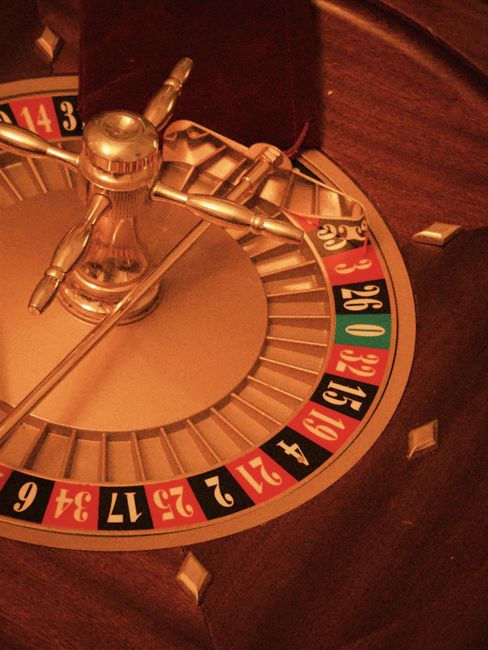
- European roulette: 2.7%. American roulette doubles the zeros to two, pushing it to 5.26%. That single extra pocket is a massive difference over hundreds of spins.
- Slots: Anywhere from 2% to 15%, depending on the machine and jurisdiction. Most modern video slots sit around 4% to 8%.
- Keno and lottery-style games: Often 20% to 35%. Brutal.
The takeaway isn't avoid everything except blackjack. It's that if you're going to spend an evening on slots, you should know you're paying for entertainment with a higher built-in cost than a table game. That framing changes how you budget.
How Slots Actually Work (And What RTP Really Means)
Modern slots are powered by random number generators, or RNGs. Every spin is independent. Every result is essentially a roll of a very complicated set of dice. There's no muscle memory, no "due" machine, no hot streak you can ride. If a slot hasn't paid out in three hours, that tells you nothing about the next spin.
What you can use is RTP — Return to Player. A slot with 96% RTP returns, on average over millions of spins, 96 cents for every dollar wagered. Two things trip people up here:
- RTP is a long-run average, not a session promise. You can lose 100% of your bankroll in an hour on a 96% RTP game. The percentage only smooths out over enormous sample sizes you will never personally play.
- Volatility matters more than RTP for your experience. High-volatility slots pay rarely but big; low-volatility slots pay often but small. Match this to your bankroll. A high-volatility game with a $20 budget will likely just vanish.
Also check the max win cap. Some slots cap payouts at 5,000x your stake; others advertise 50,000x. That number is usually baked into the volatility profile, not a bonus.
Poker Is the One Game Where You're Not Fighting the House
Here's the beautiful thing about poker: you play against other players, not the casino. The operator just takes a rake — a small percentage of each pot — and steps back. That means a skilled player can be genuinely profitable over time, which is not true of slots or roulette.
But "skilled" is doing a lot of work in that sentence. The modern online poker pool is tough. Recreational players have largely migrated to fast-fold variants and spin-and-go formats, and the regulars in cash games are sharper than they were a decade ago. If you're serious about improving, focus on these fundamentals before chasing advanced solver work:
- Position: Acting last is worth more than any hand chart. Fold more in early position, widen up on the button.
- Bankroll management: Never sit at a table with more than 5% of your dedicated poker bankroll. Variance is real and will humble you.
- Rake awareness: High-rake micro-stakes games can be nearly unbeatable. Sometimes moving up in stakes actually reduces the effective rake bite.
- Volume beats brilliance: A solid, boring strategy played consistently outperforms occasional hero plays.
Bonuses: Read the Wagering Requirement Before You Celebrate
Welcome bonuses look generous until you scroll down. A $1,000 match bonus with a 40x wagering requirement means you need to bet $40,000 before you can withdraw a cent of it. And slots usually count 100% toward that requirement while table games might count 10% or 20% — or not at all.
Before claiming any offer, check three numbers:
- Wagering multiplier (lower is better; anything under 30x is decent).
- Game weighting (which games count toward clearing it).
- Maximum bet while the bonus is active (typically $5 or $10; exceeding it can void your winnings).
Free spins have their own fine print: winnings often go to a bonus balance with separate terms, and "free" spins on a high-volatility slot can be gone in sixty seconds with nothing to show for it.
Licensing, Safety, and the Quiet Boring Stuff That Actually Matters
Where a casino is licensed tells you a lot about your recourse if something goes wrong. Reputable regulators — the UK Gambling Commission, Malta Gaming Authority, Gibraltar, several US state boards — require audited RNGs, segregated player funds, and formal dispute resolution. An unlicensed offshore operator can simply ignore your complaint.
A few practical checkpoints:
- Verify the license number on the regulator's own website, not just the logo in the footer.
- Look for eCOGRA or similar third-party audits of RNG fairness.
- Enable two-factor authentication. Account takeovers are one of the most common player-side losses, and it has nothing to do with luck.
- Test withdrawal speed with a small amount before depositing serious money.
Playing the Long Game
The players who enjoy iGaming the most over years, rather than weeks, share a specific mindset. They treat their bankroll as an entertainment budget, not an investment. They understand that slots are volatile, that poker rewards study, that blackjack punishes guessing, and that bonuses are marketing with math attached. They set deposit limits before they start a session, not after. They never chase a loss, because the next spin is mathematically unrelated to the last one.
None of this removes the fun. If anything, it sharpens it. You stop hoping the machine owes you something and start enjoying the game for what it actually is — a priced experience with occasional upside. The house edge is permanent. Your decisions don't have to be careless. Know the numbers, respect the variance, and play like someone who plans to still be doing this next year.