Slot Volatility Explained: Why Big Wins Feel Impossible
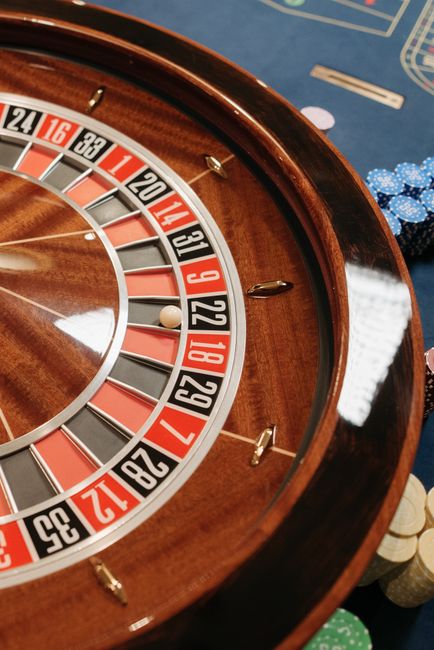
You've been spinning the same slot for forty minutes. Your balance is down, the bonus round hasn't triggered, and that guy in the forum just posted a screenshot of a 5,000x win on the exact same game. Before you conclude the machine is rigged or your account is cursed, there's a number you probably ignored when you loaded it up: volatility. Understanding volatility — sometimes called variance — is the single most useful piece of knowledge a slots player can have. It won't change the math, but it will change how you pick games, how you size your bets, and how you handle the swings that are baked into every spin.
What Slot Volatility Actually Measures
Volatility describes how a slot distributes its payouts over time. Every slot has a Return to Player percentage (RTP) — say 96% — which is the theoretical share of all wagered money returned to players over millions of spins. But RTP tells you nothing about the ride. Two slots can both sit at 96% and feel completely different. A low-volatility game pays small amounts frequently, so your balance drifts gradually. A high-volatility game starves you with dead spins, then hits you with a monster. Same RTP, wildly different experience.
Think of it like two salary structures. One job pays you $500 every week, reliably. Another pays you $26,000 once a year and nothing in between. Same annual income, but the second one requires you to survive twelve months without a paycheck. Slots work identically, just compressed into hours instead of months. Further details are available through สล็อตเว็บตรง.
- Low volatility: frequent small wins, gentle balance curve. Examples include many classic 3-reel fruit slots and games like Starburst.
- Medium volatility: a mix of modest and moderate wins, the middle ground most mainstream releases occupy.
- High volatility: long dry spells, rare but massive payouts. Think Money Train or San Quentin.
- Extreme volatility: brutal dead-spin runs with max wins in the tens of thousands of times your stake.
Why the Bonus Round Lies to You
Here's where most players get tripped up. You finally trigger free spins on a high-volatility slot, and you win 8x your bet. Feels insulting after a 200-spin drought. But that's normal — free spins on volatile games aren't guaranteed jackpots. They're lottery tickets with better odds. On some games, the entire value of the bonus round sits in a rare multiplier or a full-screen symbol combination that appears in perhaps one out of fifty triggers.
Providers publish hit frequency data on some games, but it's not standardized across the industry. A slot with a 20% hit rate means four out of five spins return nothing. On a high-volatility title, that figure can drop well below that, and the majority of those hits might return less than your stake. Knowing this stops you from chasing a bonus round as if it owes you a payout.
Matching Volatility to Your Bankroll
The practical rule is simple: your bankroll and your patience should dictate the volatility you play, not the size of the advertised max win. A 50,000x potential is meaningless if you bust after 100 spins.
- Estimate your spin count. Divide your session budget by your bet size. If you have $100 and bet $0.50, you have 200 spins.
- Apply a safety factor. On high-volatility slots, assume you might need 300–500 spins to see a meaningful hit. With 200 spins, you're gambling on luck arriving early.
- Drop stakes, not standards. Most high-volatility games accept minimum bets of $0.10–$0.20. Lower your stake to stretch your session rather than switching to a low-volatility game you find boring.
- Set a hard stop. Determine the loss point where you walk away before you start. Volatility punishes players who improvise.
Streamers, Big Wins, and Survivorship Bias
Slot content on YouTube and Twitch warps perception badly. A streamer might open a bonus buy on a high-volatility slot fifty times on camera. They show the one that paid 2,000x and quietly absorb the forty-nine that returned 30% of stake. You're watching the survivors. Nobody posts a video titled "I lost my rent money on 600 dead spins." Treat every insane win screenshot as a lottery winner's selfie — real, but statistically meaningless to your next session.
The same bias infects casino forums and Reddit threads. Complaints about "rigged" slots spike on high-volatility games precisely because those games behave as designed. A 96% RTP slot can still eat 60% of your balance in a 300-spin stretch; the math only smooths out over millions of spins, far beyond any single session.
A Quick Word on Other Casino Games
Volatility isn't a slots-only concept. Blackjack played with basic strategy is low volatility with a tiny house edge — your results cluster tightly around break-even, which is why grinders love it. Poker, especially tournaments, is extreme volatility: you can play flawlessly for six hours and bust on a coin flip. Sports betting sits on a spectrum too. A single accumulator with eight legs is high volatility; a flat-stake strategy on -110 lines is comparatively low. The principle never changes: higher variance means you need a bigger bankroll and stronger emotional tolerance to survive the downswings.
Reading the Fine Print Before You Spin
Before depositing into any new slot, spend two minutes on the paytable and game info screen. Look for RTP (anything below 95% is stingy for modern slots), max win, and whether the game uses a bonus buy feature — those often reveal the intended volatility tier. If a provider publishes a volatility rating, take it seriously rather than assuming every flashy game is a jackpot machine. And remember: no strategy, pattern, or timing system changes the underlying math. A slot doesn't know you've been losing, and it doesn't owe you a win because you've "paid your dues."
The players who last longest in this hobby aren't the ones chasing the biggest advertised multipliers. They're the ones who understand that volatility is a personality trait of each game, pick titles that match their budget and temperament, and treat every session as entertainment with a defined cost. Get that right, and the dry spells stop feeling like betrayal and start feeling like exactly what you signed up for.