The Real Difference Between Luck and Skill in Online Gambling
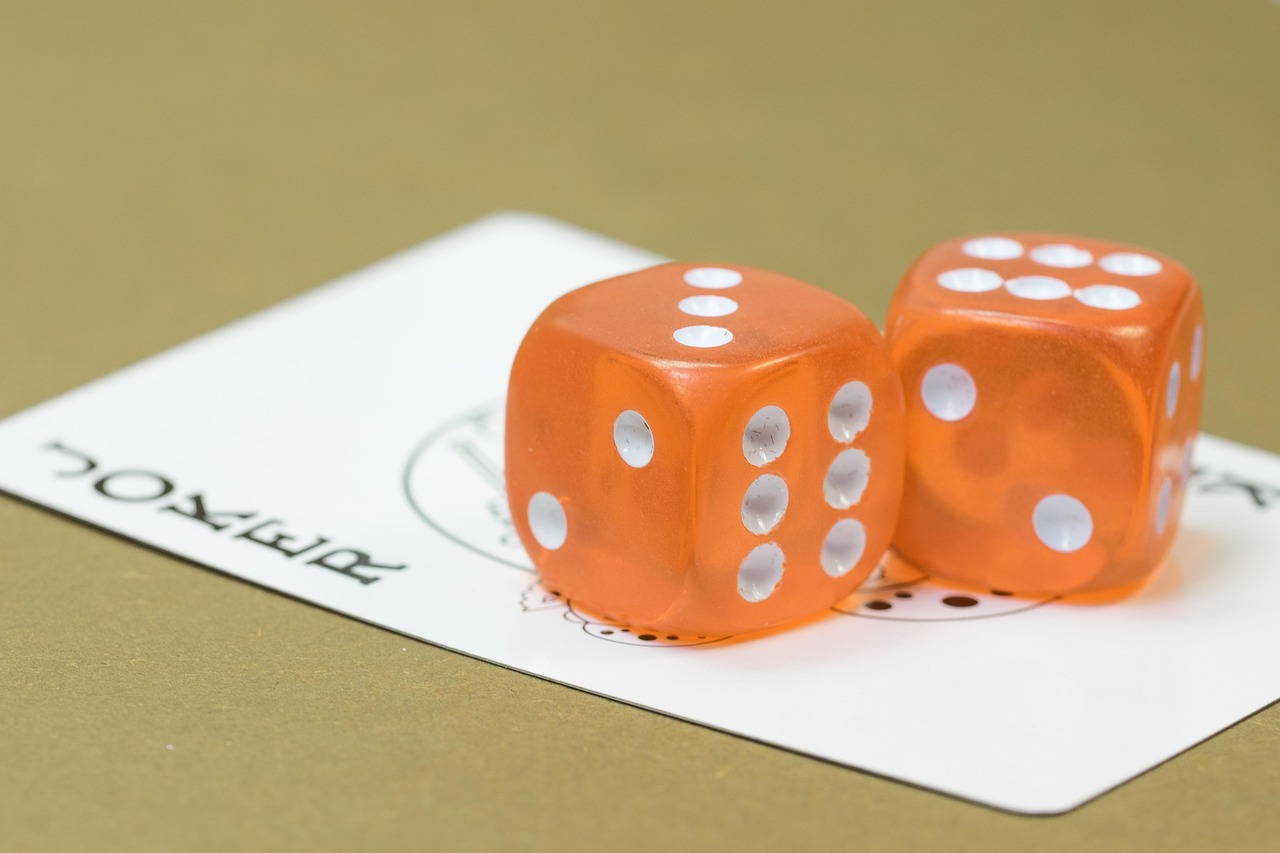
Every gambler has heard the same tired line: "The house always wins." It's true enough at a macro level, but it's a useless piece of advice when you're staring at a screen at 2 a.m., deciding whether to raise on the river or spin one more bonus round. The truth is that casino games and sports betting exist on a spectrum between pure chance and genuine skill, and understanding where each game falls changes how you should play, what you should expect, and — most importantly — how you should manage your money.
Let's break down how the math, the psychology, and the game design interact across the major verticals: slots, table games, poker, and sports betting. We found สล็อตเว็บตรง to be a handy reference here.
Slots: The Purest Form of Chance (And Why That Matters)
Slots are the most straightforward category in iGaming. Modern video slots run on Random Number Generators, or RNGs, which are audited by third parties like eCOGRA or GLI to ensure that every spin is independent of the last. That last part is crucial: the machine has no memory. A slot that hasn't paid out in three hours is not "due." A slot that just hit a jackpot isn't "cold." Each spin is a fresh draw from the same probability distribution.
What actually determines your experience is the return-to-player percentage, or RTP. A slot with a 96% RTP theoretically returns 96 cents for every dollar wagered over millions of spins. The remaining 4% is the house edge. But here's the trap: that 96% figure is a long-run average, and your session might consist of 200 spins where the variance swings wildly in either direction.
- High volatility slots (like many Megaways titles) pay rarely but can hit 5,000x your stake. They require a bigger bankroll and more patience.
- Low volatility slots pay frequently but in smaller amounts. They're gentler on your bankroll but rarely produce life-changing wins.
- RTP ranges vary dramatically between providers. Some Pragmatic Play slots sit around 96.5%, while certain "budget" versions drop to 94% or lower. Always check the game info screen.
My honest take: slots are entertainment, not an investment strategy. No betting system — Martingale, Fibonacci, or otherwise — changes the underlying math. What you can control is your stake size relative to your bankroll. A common rule of thumb is to keep individual spins at 1% or less of your total session budget.
Table Games and Blackjack: Where Small Edges Hide
Move to the tables and the house edge narrows. European roulette carries a 2.7% edge thanks to the single zero. American roulette doubles that to 5.26% with the double zero. Baccarat, strangely, offers some of the best odds in the building: the banker bet has roughly a 1.06% house edge when you account for the 5% commission.
Blackjack is the standout. With basic strategy — a chart that tells you the mathematically optimal play for every hand combination — a skilled player can cut the house edge to around 0.5%. Under favorable rule sets, card counters can even push into positive expected value territory. But online, continuous shuffling machines and auto-shuffled decks largely neutralize counting.
That doesn't make basic strategy useless. Far from it. Playing hunches at blackjack can easily cost you 2% or more per hand compared to optimal play. Over a thousand hands, that's a massive difference. If you're going to play table games, learn the strategy chart. It takes an hour to memorize and pays for itself many times over.
Poker: The Only Major Game Where Skill Dominates
Poker is the outlier. In the long run, a strong player beats a weak player consistently. The house doesn't play against you — it takes a rake, usually between 2.5% and 5% of each pot, capped at a few dollars. Your profit comes from other players' mistakes.
What separates winning poker players from losing ones isn't luck or even raw card sense. It's a combination of:
- Position awareness. Acting last gives you information. Playing tight from early position and looser from the button is foundational.
- Bankroll management. A common guideline is 20 buy-ins for cash games and 50–100 buy-ins for tournaments. This buffers the inevitable downswings.
- Player profiling. Tagging opponents as tight, loose, aggressive, or passive and adjusting your play accordingly is where real edge lives.
- Emotional control. Tilt — playing emotionally after a bad beat — destroys more bankrolls than bad cards ever will.
Poker rewards study. Solvers, hand-history reviews, and training sites have democratized knowledge that used to be locked behind coaching. But the flip side is that the average opponent is much tougher than ten years ago. If you're not actively improving, you're falling behind.
Sports Betting: Information, Line Movement, and Discipline
Sports betting sits somewhere between poker and slots. The outcome is uncertain, but your ability to price it matters. Sharp bettors don't just pick winners — they find bets where the implied probability of the odds is lower than the true probability of the outcome.
Key concepts every bettor should understand:
- Vig (or juice). The bookmaker's commission, typically baked into odds like -110 on a coin-flip bet. That means you need to win around 52.4% of your bets just to break even.
- Closing line value (CLV). If you consistently bet lines that move in your favor by kickoff, you're likely a long-term winner, even if short-term results are noisy.
- Bankroll units. Serious bettors wager in units, usually 1–2% of their total bankroll per play. Flat betting avoids the emotional rollercoaster of chasing losses.
- Line shopping. The same game can differ by half a point or 10 cents across books. Over hundreds of bets, that margin decides profitability.
Unlike poker, you can't control the outcome of a game. What you can control is the price you take and the size of your bets. That's where all long-term sports betting edge comes from.
The Common Thread: Variance Is Not Your Enemy
Across every vertical, the same principle applies: results in the short term are dominated by variance, and only in the long run does edge (or lack thereof) reveal itself. This is why chasing losses feels so natural and is so destructive. A losing session at slots, a bad beat at poker, or a four-leg parlay that misses by one goal — none of those are signs that you're "due" for a win. They're just noise.
The players who last are the ones who set loss limits before they log in, treat gambling as an entertainment expense rather than an income source, and understand which games they can actually beat. If that's poker or smart sports betting, great. If it's slots or roulette, then budget accordingly and enjoy the ride without pretending it's something it isn't.
Ultimately, the smartest gamblers aren't the ones with the biggest wins. They're the ones still playing — and still in control — five years down the line.